Karachi — Let birds carry your worries away. On the Native Jetty Bridge in Karachi in Pakistan, locals gather every day to feed birds and fish. As a good deed.

At an afternoon in April I saw black silhouettes in the sky over Karachi: birds of prey, whole flocks of them, circling above the harbour. They were black kites. Among them fluttered crows and pigeons. Their attention was on a bridge that spans the harbour basin: the Native Jetty Bridge.

Karachi lies on the coast of the Arabian Sea. It was once the capital of Pakistan. To this day it is the largest city in the country. When I visited this mega-city in 2007, an estimated 14 million people lived there. Today it’s said to be over 20 million, most of them Muslim. Every day hundreds of them visit the Native Jetty Bridge to feed birds.
Every day hundreds visit the Native Jetty Bridge to feed birds.
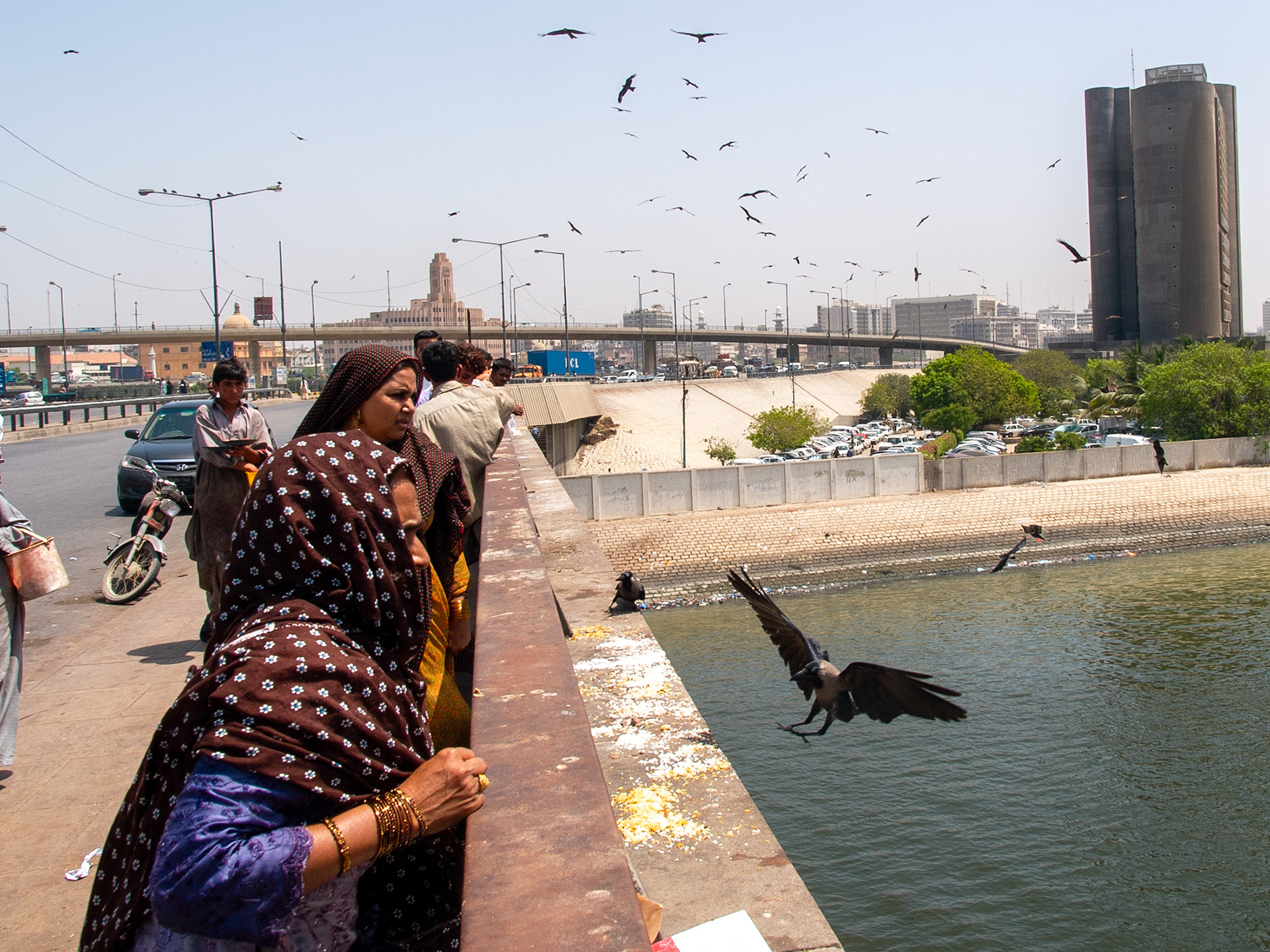
The feed: meat or dough balls. Some bring their ration themselves. Others buy them from vendors on the bridge. The feed is thrown into the air or into the water. Feeding birds and fish is a kind of sadaqa, explained a vendor to me — a voluntary good deed. It’s about pleasing Allah. Some also want to rid themselves of worries or ward off the evil eye.

The ritual has made the Native Jetty Bridge into an excursion spot, with everything that goes with it. On the sidewalks along the bridge (inaugurated in 1854) and the adjacent promenade called Port Grand, street-food is sold. I even discovered popcorn there!

I was prepared for a lot when I travelled to Karachi. The city repeatedly experiences heavy unrest. Sometimes it is religious or ethnic in motivation, sometimes simply criminal. But the city revealed itself to me quite differently: Everywhere I encountered lovable, lively people who were open to visitors like me. No suspicion, always a smile.

Birds are in the Koran a symbol of creation. Those who feed them do good — and may receive something in return. The vendor I spoke with called it «Sawab» (also spelled «Thawab»). In general it’s translated as «reward».
Birds are in the Koran a symbol of creation. Those who feed them do good — and may receive something in return.
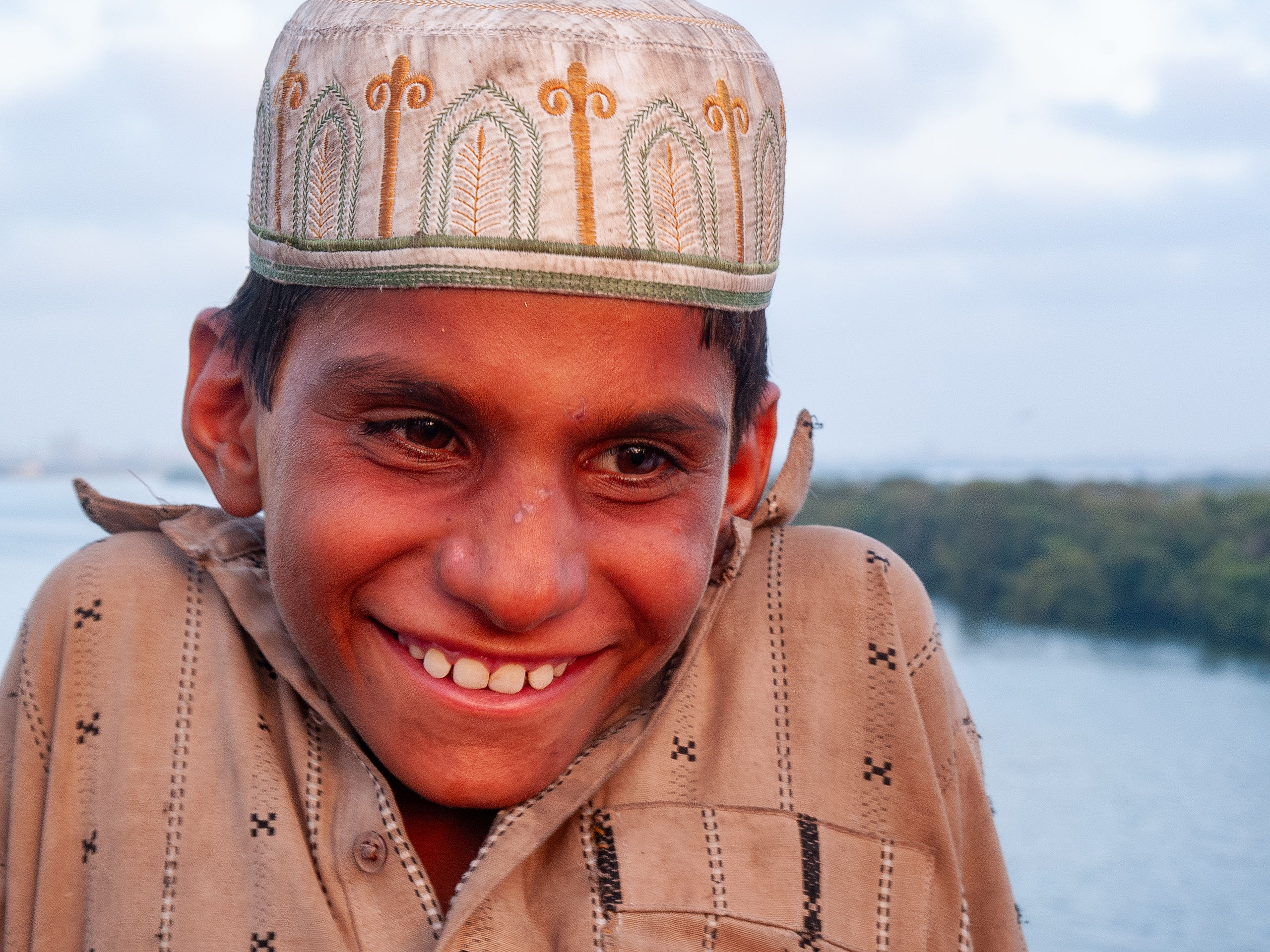
Karachi is the economic centre of Pakistan. As a result it attracts people from all parts of the country. Languages, cultures, kitchens and customs come together here. Hence the city’s nickname: «Mini-Pakistan». Yet although Karachi holds the economic power, the majority of its inhabitants live in poverty.

The city does not have many open spaces. That makes the bridge a popular meeting place. In the distance you can see the skyline — for some an incentive. Others come in despair. Many people have already jumped to their deaths from the Native Jetty Bridge.


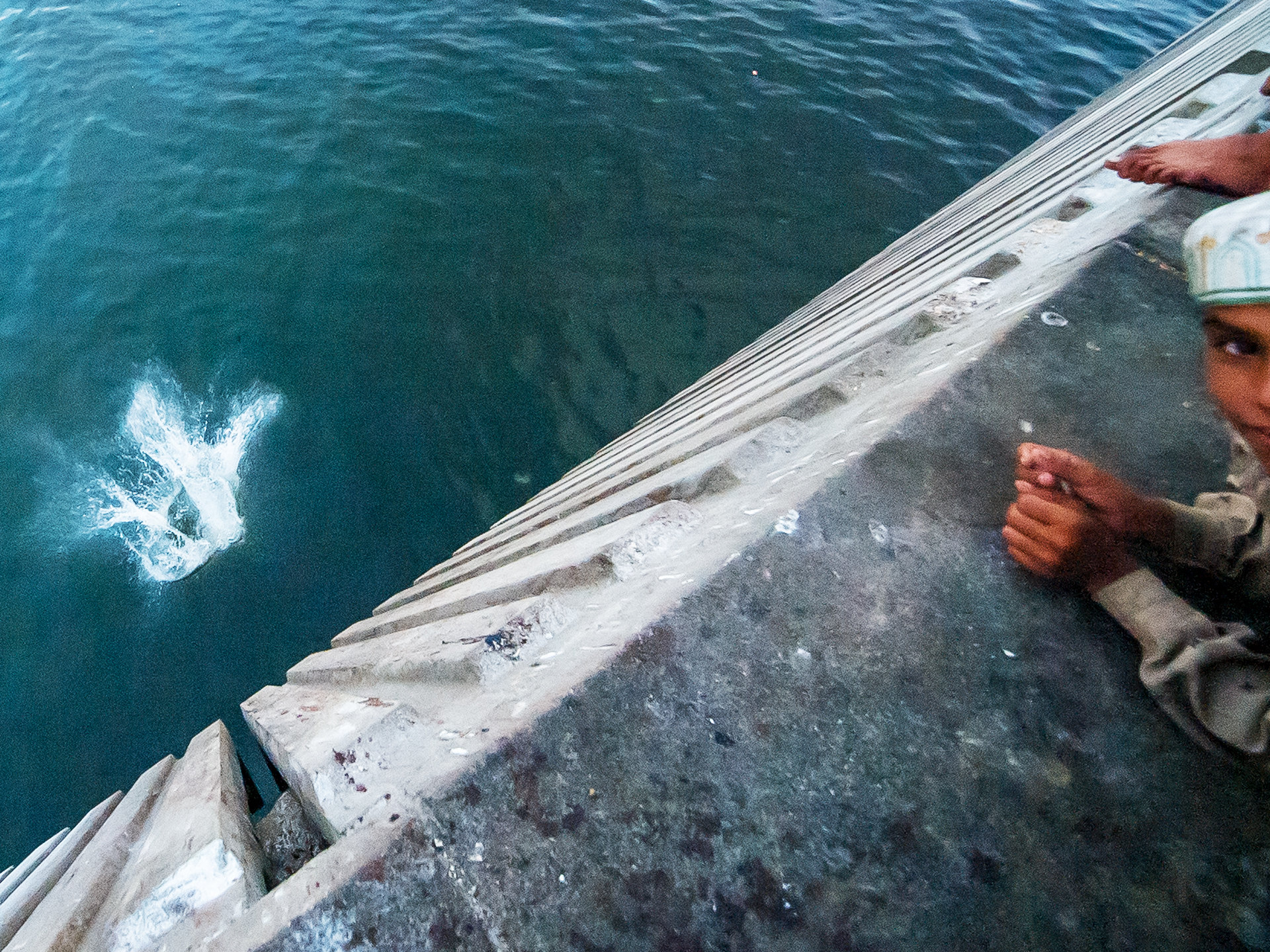
Unperturbed, young men repeatedly jump in for show into the sluggish waters of the Arabian Sea. Breathtaking: from the bridge it’s perhaps 10 metres to the water’s surface. Those who surface unharmed receive applause — and sometimes a little money from the spectators.
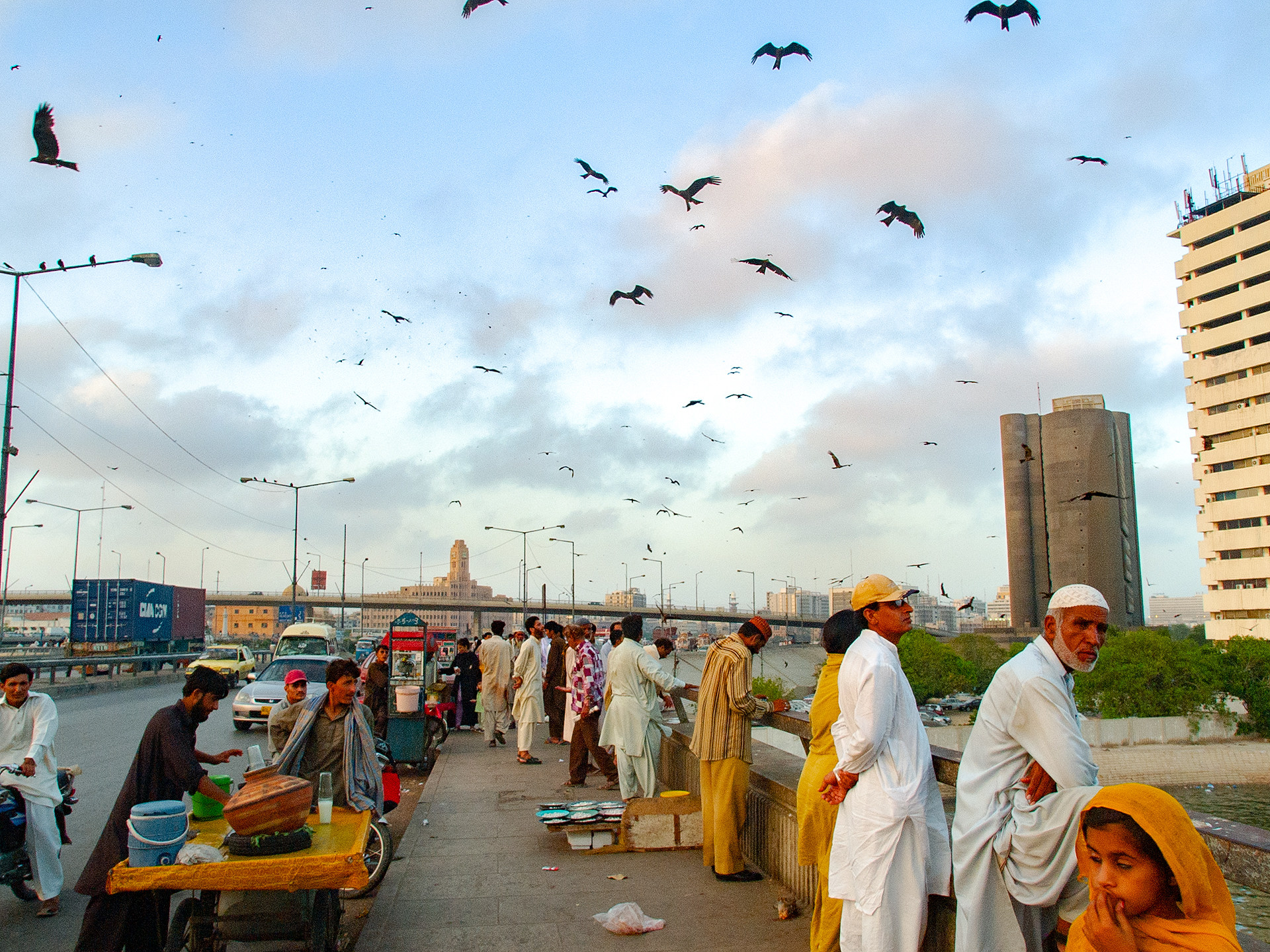
Trucks and motorcycles roar past. There’s honking. But there is also green: mangroves grow in the dark water. They live off the freshwater of the Indus, a river that mouths here. Bushy and dense the mangroves protect the city from storms. And everywhere you hear the cries of the birds.
keep on tasting ...
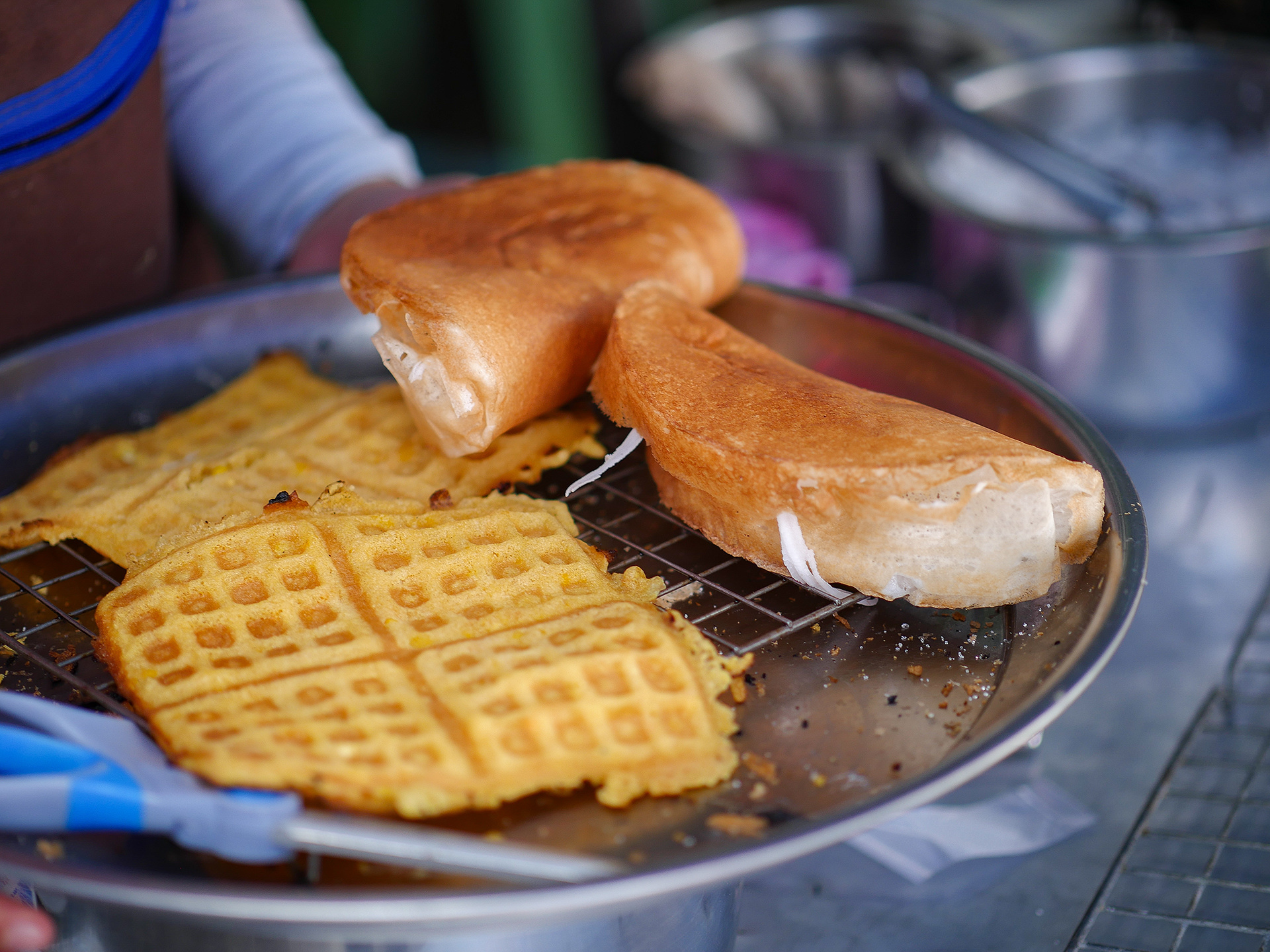
Thai coconut pancakes — Only authentic with the fold. They are fluffy and folded together like tacos: this market snack is called Khanom Thang Taek. Ready for a sweet tradition?
Helmut Haase
Photography & Stories
Alle Texte und Fotos sind urheberrechtlich geschützt. Wenn Sie an der Nutzung bestimmter Inhalte interessiert sind, nehme ich gerne Ihre Anfrage entgegen.
© Helmut Haase 1975 – 2026