Temples, gurus, and business.
A trip to Delhi and Kathmandu.
Once your appetite for travel is whetted, it only grows. That’s why I traveled to India again in 1974—and this time, to Nepal as well. After all, Kathmandu was one of the well-known final stops on the Hippie Trail at that time.
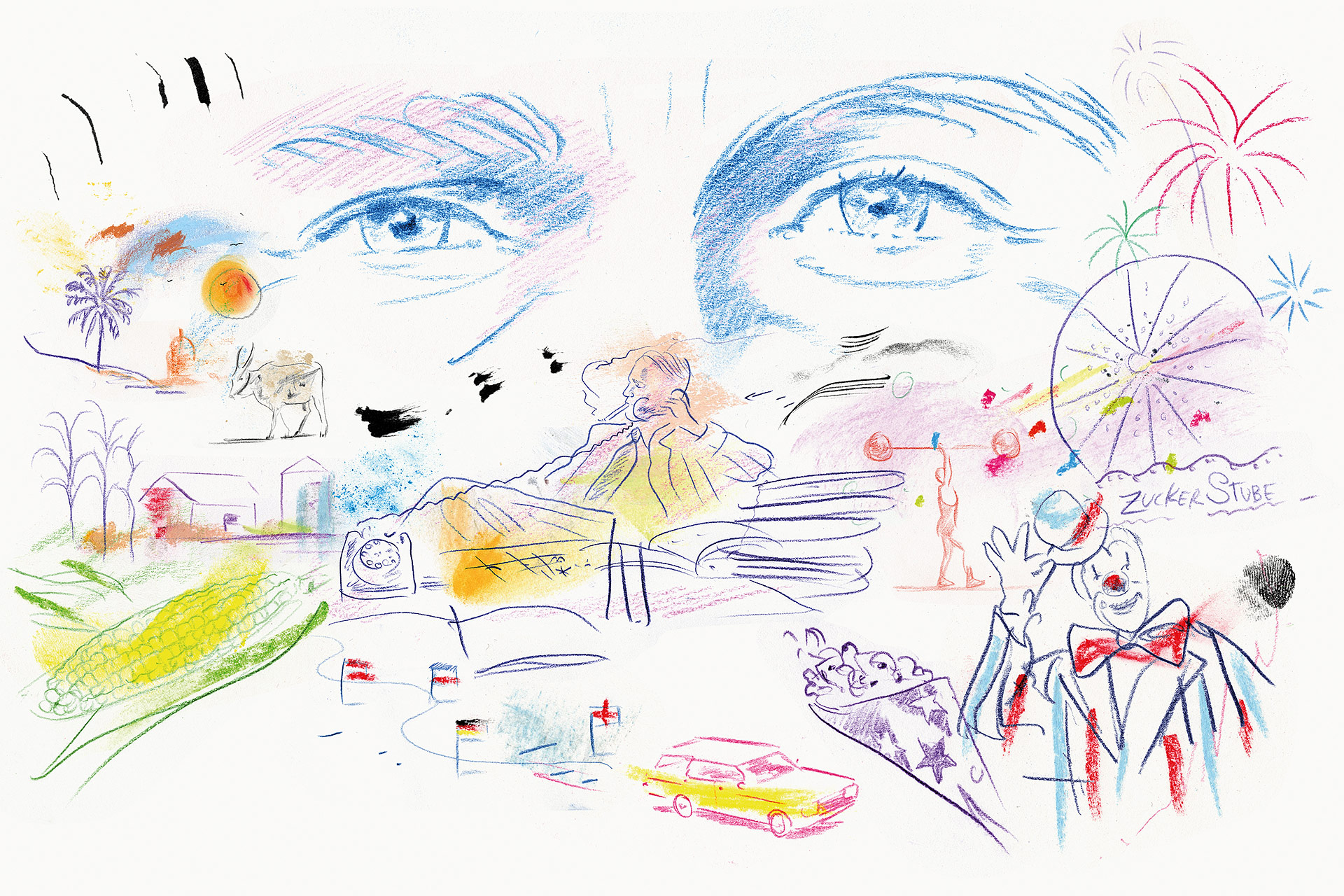
Illustration: Thit Thyring
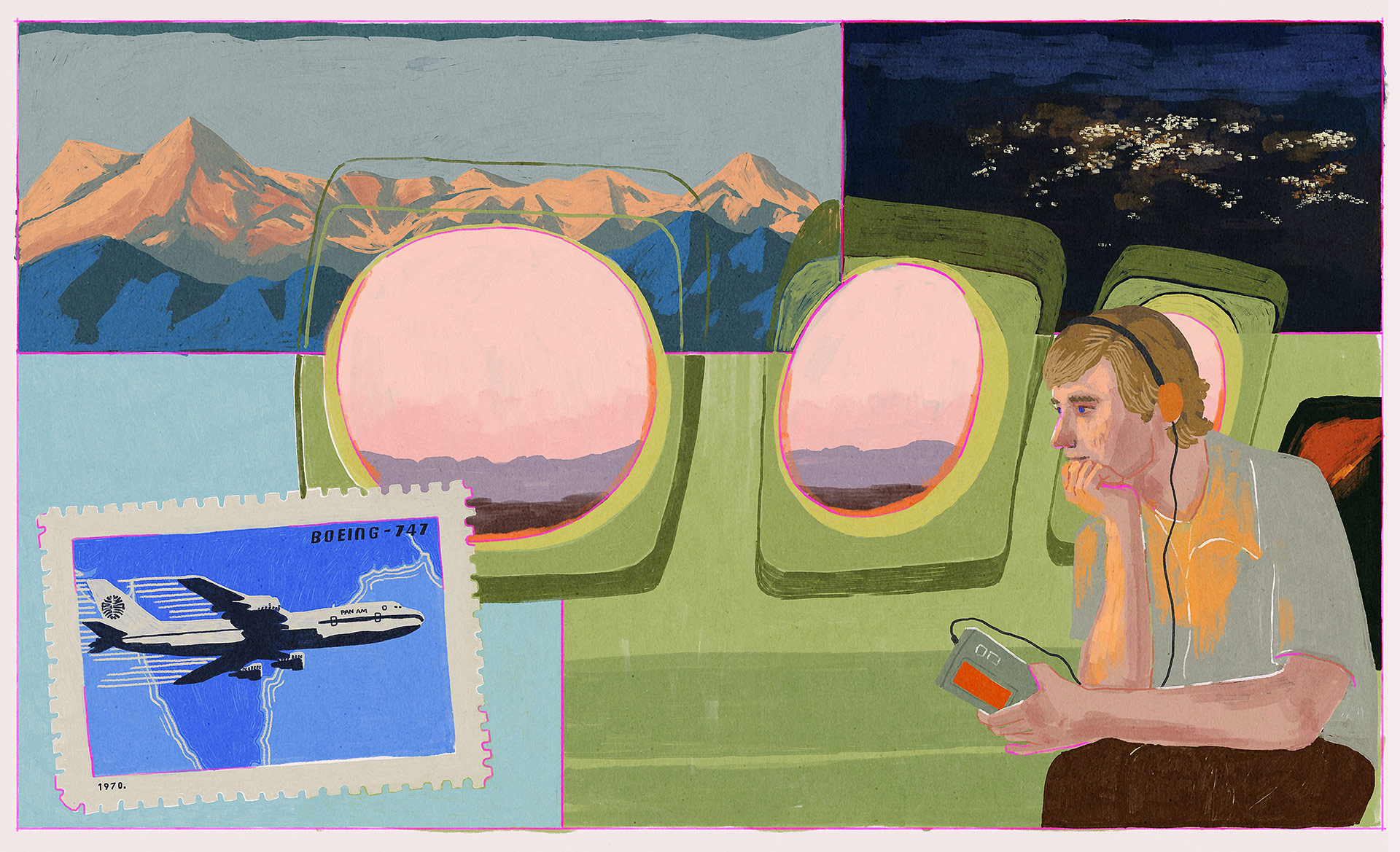
«The song ‹Katmandu, I'll Soon Be Seeing You› by Cat Stevens was playing on repeat on my Walkman. Full of anticipation, I was on my way there.»
On a jumbo jet headed for India
After traveling overland to India on the Hippie Trail in 1972, I felt it for the first time—that feeling I still haven’t been able to shake off to this day. It’s a kind of tug in my chest and a voice that whispers: «Something’s still missing!» I think it hits you as soon as you’ve truly traveled for the first time, experienced adventure, or weathered the uncertainties of the journey. Because in doing so, new worlds open up to you—and those, in turn, tempt you to want to see and understand even more. That’s how it is for me. There’s actually always still something missing.
So it’s no wonder that, shortly after my Hippie Trail trip, I was drawn back to distant lands. It must have been in January 1974 when, together with my friend Werner — a photographer and inventor from Berlin — I set out on my second trip to India, which we combined with a trip to Nepal. After all, Kathmandu was one of the final stops on the legendary Hippie Trail — and I hadn’t made it there the first time around.
I still remember sitting in the Pan Am Airlines jumbo jet, gazing with wide-eyed wonder at the nighttime lights of Pakistan passing far below me, or discovering the snow-capped mountains and gorges of the Himalayas at dawn. Cat Stevens’ song «Kathmandu, I’ll Soon Be Seeing You» played on repeat on my Walkman. Full of anticipation, I was on my way there.
«Fog and wisps of smoke drifted through the streets. Stray dogs looked at us sleepily. Everywhere along the roadside were open fires where people were warming themselves after waking up. After all, it was January, and nights in Delhi can still be quite cold.»
Hospitality and Prayers
But first, we headed to Delhi. And there was a reason for that: At the time, I had already been selling homemade popcorn at flea markets and at Langener Waldsee—the largest swimming lake in the Rhine-Main region—for about a year with a travel business license. Sometimes two brothers who lived in Frankfurt but were originally from India helped me with this. They had invited us to visit their family in Delhi and to stay with them for a few days in the Roop-Nagar neighborhood—Werner and I were grateful. That gave us a place to stay.
The family belonged to the Sikh religion, the fourth-largest religious community in India, recognizable by their artfully tied, often colorful turbans. They use them to cover their hair, which they traditionally do not cut—out of respect for creation. The family’s hospitality was legendary. In their tradition, guests are considered equal to God—and we were treated accordingly. For example, even before sunrise, there would be a knock on our bedroom door, and we’d be served a wonderfully steaming «Early Morning Tea» in bed.
Apocalyptic Scenes
One morning, I made plans to meet with the head of the family. I wanted to accompany him as he walked to the gurdwara temple near the Chandni Chowk Old City Bazaar at 4:30 a.m. Our walk took about an hour and a half and was filled with scenes I will never forget.
Fog and wisps of smoke drifted through the streets. Stray dogs looked at us sleepily. Everywhere along the roadside were open fires where people were warming themselves after waking up. It was January, after all, and nights in Delhi can still be bitterly cold. Dozens of people were still sleeping on the sidewalks and didn’t let their night’s rest be disturbed even as a cart loaded with the bodies of the deceased rolled past them.
For me — to whom everything was foreign anyway — this snapshot had something apocalyptic about it. Deeply moved, I kept walking. It wasn’t until later that I learned there was a crematorium near our path, to which those bodies were presumably being taken. What seemed strange to me was simply a part of everyday life there.
When we arrived at the temple — a delicate white structure with several golden domes — we soon found ourselves in the midst of a colorful bustle. Countless devout Sikhs had come to the gurdwara that morning to pray. Gurdwara means «gateway to the Guru», and the temple is open to everyone — you just have to cover your head with a scarf and take off your shoes.
We entered the heart of the temple and sat down on the floor in the large interior, adorned with gold and murals. Little bells rang out; the sounds came from several small instruments, the tablas, which several men played by hand; as they played, they sang, and their singing was broadcast over loudspeakers, soon filling the entire temple with sound. Then they prayed. There was an atmosphere of devotion, acceptance, and openness in which I, too, felt welcome and accepted.
A gentle smile seemed to hover over all those scenes. After the ceremony, everyone looked into each other’s eyes with warmth and happiness. And when we left the temple, a driver was already waiting for us; he picked us up by car and drove us back to my host’s house for breakfast. There, all seven sons sat down one after another next to their father. But before they sat down, each one first kissed his father’s feet and then those of his older brothers. Werner and I had never experienced anything like this before. But even though their way of life and traditions were so different from ours, we felt at ease and like part of the family.
I also realized that this exact way of traveling suited me perfectly. To this day, that’s how I prefer to travel: I plan only the broad outlines of my stays—and then let myself go with the flow, immersing myself above all in the places, people, and events around me. I have great faith in this approach. When opportunities for new experiences arise, I embrace them. In this way, I’ve been blessed with many special experiences, and doors have opened for me that usually remain closed to ordinary tourists.
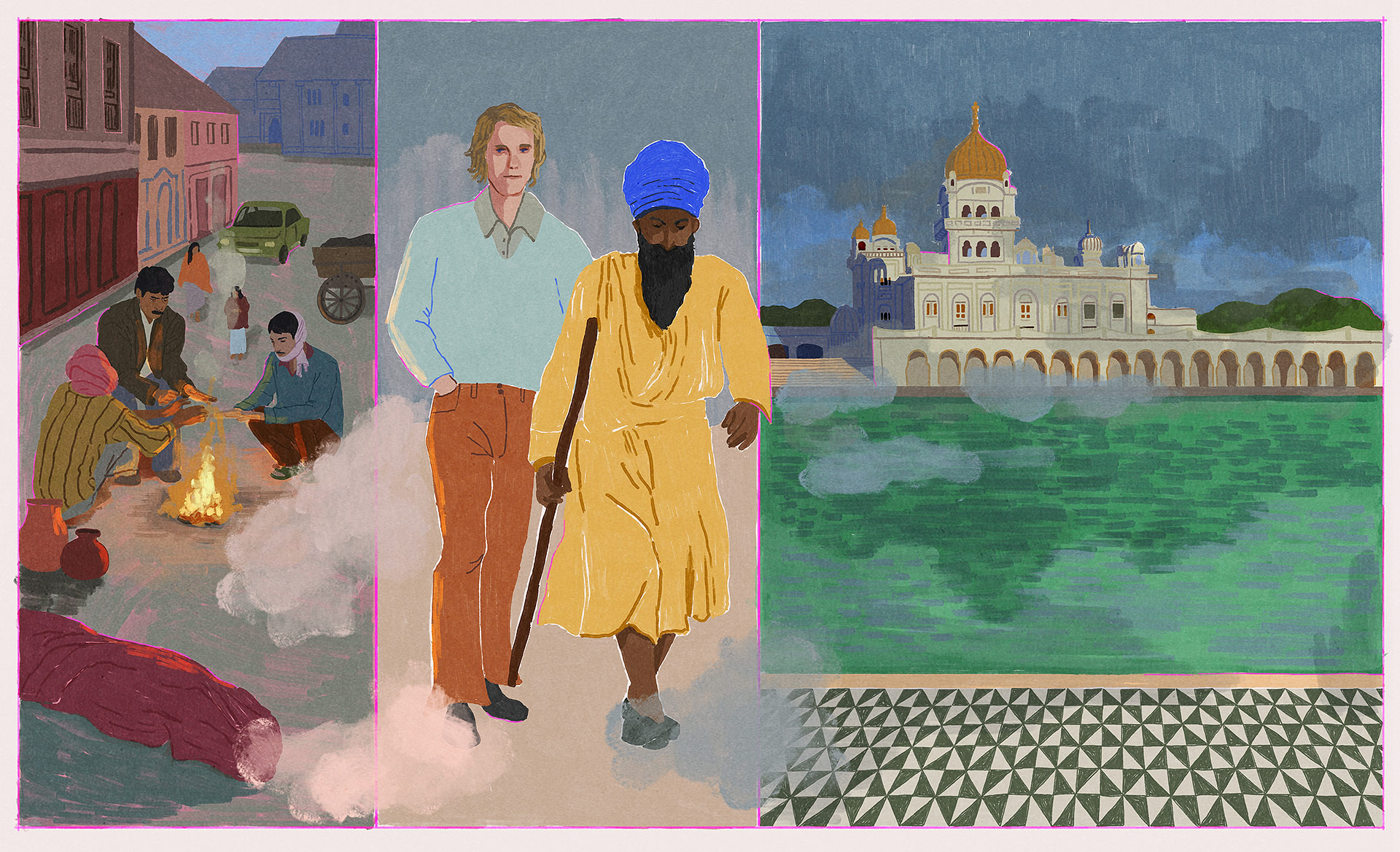
«That's still my favorite way to travel today: I plan only the broad outlines of my trips — and then I just go with the flow and, above all, immerse myself in the places, people, and events around me. I have a lot of faith in that.»
First Encounter with the Kinnar
One evening, Werner and I were invited to a religious festival. There, I encountered the so-called Kinnar for the first time — they are transgender people, also known as hijras or eunuchs, who usually show up uninvited at festivals and weddings. With atmospheric, often loud chants, drumming, and wild dances, they draw attention and bestow their blessings —at least on those willing to make a donation. Woe to those who don’t, they say.
Back then, I knew virtually nothing about the Kinnar’s way of life or their community — but something happened that often happens to me while traveling: I stumbled upon a new topic that I wanted to learn more about and explore in greater depth. And many years later, I actually managed to establish closer contact with the Kinnar community. In the process, I learned more about the harsh realities hidden behind their performances, which at first glance seem so colorful and convivial. But that’s a story worth telling all on its own.
Deeply impressed and drawn to the intensity of Indian spirituality, Werner and I also visited the ashram in Delhi of a guru who had many followers in Europe and America in the 1970s. We had both been part of the hippie scene in Germany and were curious to see what role this guru played in India. However, he seemed a bit too eager to recruit us into his organization, so we slipped away with somewhat mixed feelings.
Kathmandu Calling
We stayed with the Sikh family for about a week and planned to visit them again on our way back. Then we headed to Nepal, to Kathmandu, the place we’d been longing to visit. Even on the way there, on the flight from Delhi to Lucknow, we encountered our next guru —above the clouds, so to speak. Not only did he have a charismatic presence, but he also sat upright on a tiger skin throughout the entire flight.
As we looked out the window while approaching Lucknow, we saw that thousands of people were already waiting for him at the airport. I already knew what an important role spirituality played in India after my encounter with the guru at the ashram in Delhi, but another realization had taken root within me: for some, spirituality might also be a lucrative business idea!
From Lucknow, Werner and I flew on to Patna, the last airport in India. From there, the Royal Nepal Airlines DC-3 took just 40 minutes to reach Kathmandu. However, in Patna I first had to answer questions from the customs officials. That’s because the small portable TV I was carrying had been noted in my passport when I entered India. I wasn’t at all happy about that, because I wanted to sell it in Nepal. Technical devices «Made in Germany» were in high demand in India and Nepal back then — and I wanted to use the proceeds from the sale to help fund my trip. That’s also why I had numerous LED watches and calculators in my luggage.
When customs asked me what the TV was all about, I spontaneously resorted to a white lie. «We want to set up a TV factory in Nepal», I claimed. «And this is the prototype!» I hoped this would let me get out of the situation as quickly as possible. But the opposite happened: Immediately, the airport director invited us for tea as VIPs.
Of course, that made me uncomfortable. On top of that, the first passengers were already boarding the plane while we were still waiting for our tea. And when the tea finally arrived, it was so hot that it took us a while to finish it. I was getting nervous. All the passengers had boarded by then, and the DC-3’s propellers were already spinning. But the airport staff reassured me, saying: «Don’t worry, the plane will wait!»
When we were finally able to board the plane, we were told that the entire first row had been reserved for us. And during the flight and landing, the pilot invited us into the cockpit. In the dazzlingly clear light and against a seemingly endless mountain panorama, he showed us Mount Everest. Although it was hard to distinguish it from the many other gigantic peaks from above, the view was still breathtaking! The flight was over far too quickly, and we landed at the small airport in the Kathmandu Valley.
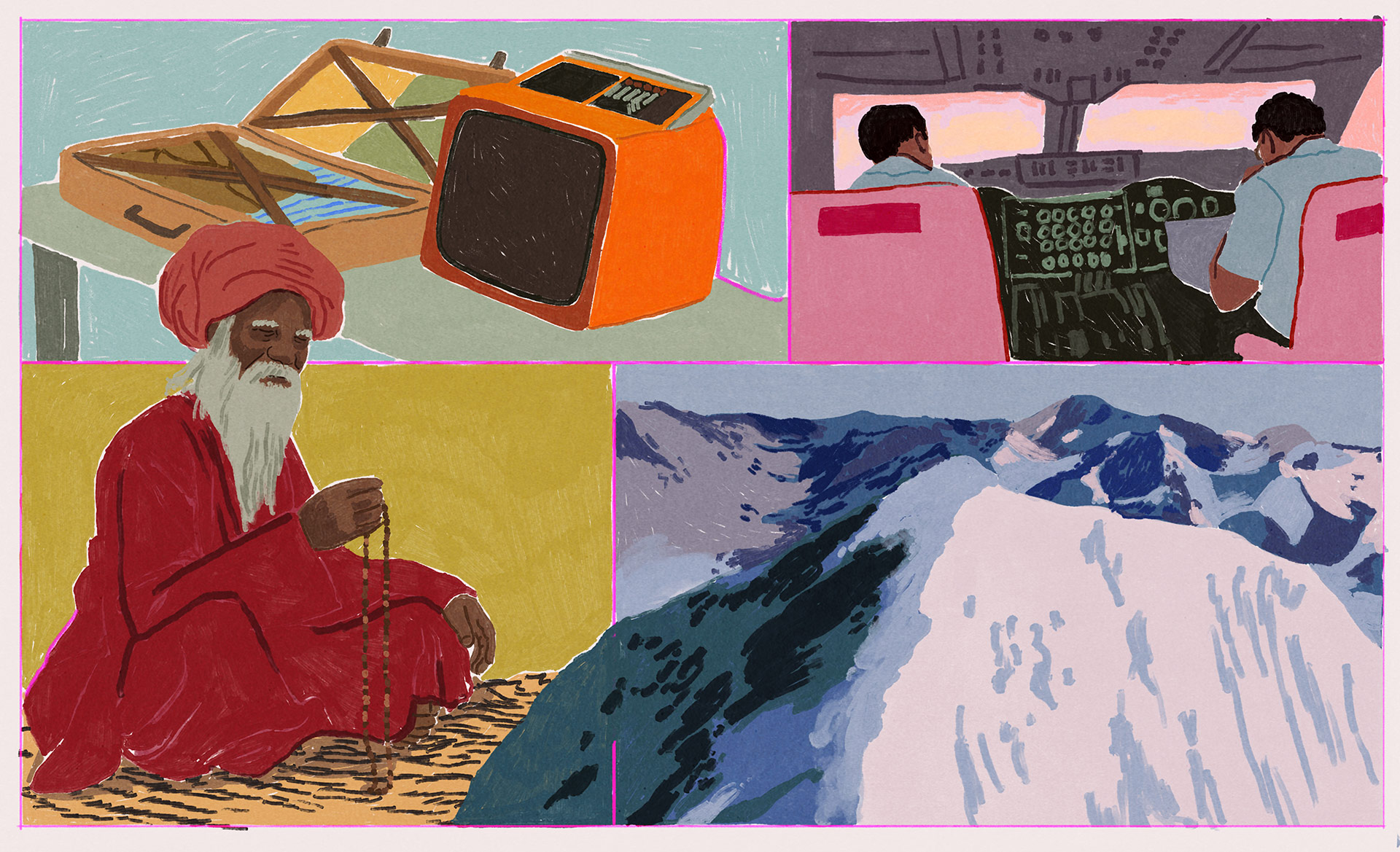
«Even on the way there, on the flight from Delhi to Lucknow, we encountered our next guru — above the clouds, so to speak. Not only did he have a charismatic presence, but he also sat upright on a tiger skin for the entire flight.»
The murmurs of the monks in a city that seems like a museum
In Kathmandu, we stayed with an elderly couple right next to the Bodnath Stupa, one of the most important destinations for Buddhist pilgrims from Nepal and the Himalayas. The faithful gather mainly at dawn and dusk to walk clockwise around the structure, turning the prayer wheels on the outer wall as they go.
In Kathmandu, Werner and I also had another point of contact: my friend Andreas, whom I knew from the hippie scene in Kassel, was living in Nepal at the time and was learning to paint thangkas — traditional Buddhist scroll paintings that are painted on linen and hung up for meditation.
In Kathmandu, we stayed with an elderly couple right next to the Bodnath Stupa, one of the most important destinations for Buddhist pilgrims from Nepal and the Himalayas. The faithful gather mainly at dawn and dusk to walk around the structure in a clockwise direction, turning the prayer wheels on the outer wall as they go.
In Kathmandu, Werner and I also had a place to go: my friend Andreas, whom I knew from the hippie scene in Kassel, was living in Nepal at the time and was learning to paint thangkas—traditional Buddhist scroll paintings that are painted on linen and hung up for meditation.
Kathmandu’s old town around the Royal Palace struck me as if it had been frozen in time or like a gigantic museum. Add to that the clear air — no comparison to Delhi! — and the atmospheric murmur of the monks as background sound. What also soon caught our attention was the cheerfulness of the Tibetans, who were frequently seen here and stood out from the crowd with their warm smiles.
A Buddhist monk about my age invited us to a ceremony at a nearby monastery. We were served butter tea, which tasted very unusual. In monotonous voices, the monks recited sacred texts, accompanied by the deep tones of voluminous dungchen, the Tibetan long-horned trumpets.
We had a completely different experience at the Swayambhunath Stupa on a hill in the western part of the city — it was teeming with rhesus macaques, who weren’t exactly friendly. A particularly muscular male stared intently at me and the cookies I was holding.
But instead of taking the cookie I held out, he threatened me with his fearsome teeth and snatched the entire package in a flash. Before I knew it, the monkey had also snatched the cookie I was holding out. I was lucky he didn’t bite me.
However, I fell ill shortly afterward. I had caught a bad cold. My hosts gave me raw opium, which I was supposed to dissolve in small doses in my tea. At the time, it was a common home remedy for curing colds. I tried it. And sure enough, it helped — without any intoxicating effects, by the way. The next day, I immediately felt much better.
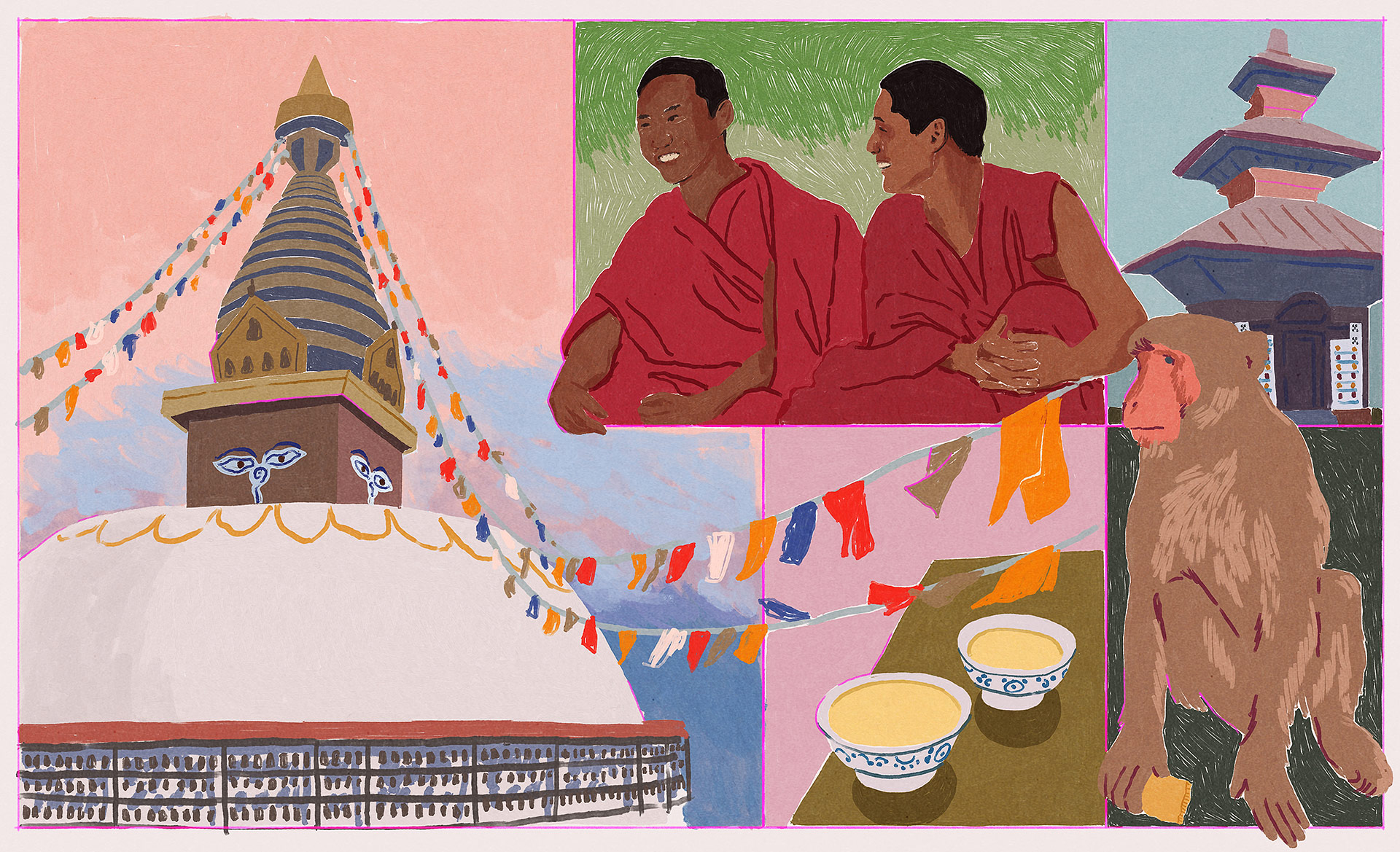
«Kathmandu's Old Town around the Royal Palace struck me as if it had been frozen in time, or like a gigantic museum. Add to that the clear air — nothing like Delhi! — and the atmospheric murmur of the monks as background noise.»
You have to take business as it comes
With my energy restored, I was then able to profitably sell the small portable TV and the last few electronic items that were still in my luggage. I used the space that had opened up in my suitcase to stock up on all kinds of antiques and handicrafts, including numerous prints on rice paper with Buddhist motifs, which I planned to sell back home.
With all these treasures, Werner and I finally flew back to Delhi, where I established my first business partnership — a joint venture — with the Sikh family. They financed a large air freight shipment, which I sold at the flea market back home with the two brothers from Frankfurt who had sent me to them. We split the profits.
In the end, this business wasn’t as successful as I’d hoped, but at least I came away with a wealth of experiences! I’d taken an inspiring detour, so to speak, during which I learned a great deal. Plus, I was now able to make a clear decision: Back home, I would continue to focus on the popcorn business I’d started before my trip.
And soon after, I heard about a shipment of high-quality popcorn machines that had arrived from Bangalore in southern India and were up for sale at the free port in the Greek city of Thessaloniki. This laid the foundation for my business and future trips to India ...
Weiterreisen ...
Faszination Popcorn: Gerade am Anfang meiner Selbständigkeit war ich kein Stratege. Eher folgte ich meiner Abenteuerlust und Intuition. Ich warf mich ins Geschehen, probierte Dinge aus, irrte, fand spontane Lösungen für Probleme und hatte mal Glück, mal Pech.
Helmut Haase
Photography & Stories
Alle Texte und Fotos sind urheberrechtlich geschützt. Wenn Sie an der Nutzung bestimmter Inhalte interessiert sind, nehme ich gerne Ihre Anfrage entgegen.
© Helmut Haase 1975 – 2026