My hippie trail — From Kassel via Kabul to the roof of the world. A trip to India was the great dream of my generation. In 1972, at the age of 22, I plucked up all my courage, gave up my apartment, packed my backpack, and boarded the train—on the legendary hippie trail to the Himalayas.
Illustrationen: Berta Vallo

One thing was at the top of the emotional wish list of many young people of my generation: we wanted to go to India! Seeing the Himalayas, the roof of the world was a dream that haunted our minds. Mine too, of course.
It started with the adventure books I read as a child. And the longer I lived, the older I got, and the more I became part of the hippie scenes in Hannoversch Münden, Kassel, and Frankfurt, the stronger the longing became.
We had no idea where our lives would take us. But one thing we knew for sure: we didn’t want to become conformists!
Helmut Haase
I had long hair back then, was a DJ, and a fan of the Beatles. Incense sticks smoldered at our parties, and «All You Need Is Love» blared from the speakers.
We cursed the Vietnam War and longed for a better world. We smoked pot and experimented with psychedelic drugs. We had no idea where our lives were going. But we knew one thing: We didn't want to become like previous generations!
So we absorbed everything that promised interesting experiences. Meditation soon became one of them. And when my idols, the Beatles, traveled to Rishikesh, India, at the end of 1968 to join Maharishi Mahesh Yogi, the founder of Transcendental Meditation, my wanderlust was further fueled ...
By train to the Orient: Munich, Vienna, Budapest, Bucharest, Istanbul
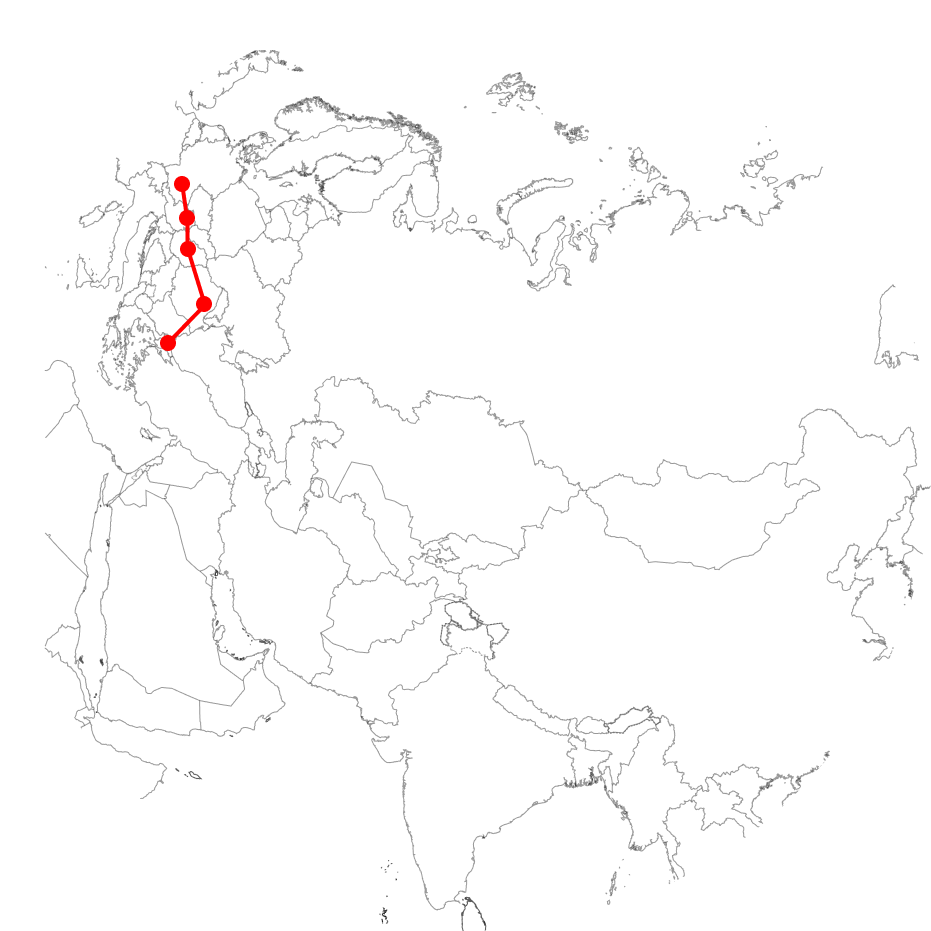
Stage I: From Frankfurt via Munich, Vienna, Budapest, and Bucharest to Istanbul
So it came to pass that one day in 1972, I actually plucked up my courage and decided to follow my dreams: «I'm doing it. I'm going to India!», I said to myself, then 22 years old.
Within a few days, I gave up my apartment, scraped together my money, and packed my backpack—much to my parents' concern, of course. At the same time, they knew that they themselves had sparked my fascination for foreign countries when the three of us traveled through Morocco in 1963. In any case, they had no chance of stopping me.
«Which one of us will travel the furthest?» I asked my fellow passengers in my compartment shortly after boarding the train in Kassel, and encouraged them to place bets on it for fun. I knew I would win: They didn't look like they wanted to go to the Himalayas.
My route first took me via Munich, Vienna, Budapest, and Bucharest to Istanbul. I was traveling alone at the time, but I was accompanied by a mixture of adventurousness and trust in God. Besides, I wasn't the only one following the promises of the «Hippie Trail». So I kept meeting people along the way.
Once there was a girl I liked. But she was traveling with a friend who had met two guys. So I was quickly out of the game. Later, I wondered how the trip would have gone if we had continued together. But who knows, maybe it was for the best. It was traveling alone that made my trip so intense.
Meeting point Pudding Shop. As a hippie, I had a place to go in Istanbul: People met at the «Pudding Shop» – a small restaurant with a large selection of oriental puddings, a garden where someone was always playing guitar, and a famous «bulletin board» where like-minded people shared travel tips.
However, I learned there that the next bus to India wouldn't leave for another five days. Sweaty and exhausted from the long train journey, I decided to visit a Turkish bathhouse and prepare myself mentally for a few days in Istanbul. I had a massage and was lathered up in soap in the hamam, and afterwards I felt reborn and enriched by this pleasant ritual.
I was also drawn to the Blue Mosque. The large prayer room alone, with its towering, intricately decorated walls and ceilings, captivated me. I sat down on the carpeted floor, began to meditate, and was soon completely absorbed.
When I opened my eyes again, I was suddenly surrounded by men kneeling and praying next to me. For a moment, I was overcome by a slight fear: Was it even okay to be here—as a Christian? Besides, I didn't know the procedures. But the man sitting next to me took me under his wing and kindly instructed me. So I took part in the prayers. It was an experience I will never forget.
«Jai sat chit anand» was a mantra that has accompanied me throughout my journey.
«Sat» symbolizes being, «chit» consciousness, and «ananda» bliss.
Helmut Haase
I was also happy the next day: I had taken a boat across the Bosphorus to the Asian side of Istanbul and discovered that a train was leaving that same evening from the venerable Haydarpasa station for Erzurum in Eastern Anatolia. I took it, even though the journey took two days and two nights, the train was completely overcrowded, and I ended up with 30 flea bites.
After a short stay in Erzurum in Eastern Anatolia, I boarded a bus to Tabriz in Persia. The journey took us through breathtakingly beautiful landscapes, past imposing mountain ranges. We crossed the border into Persia during the night. But I didn't stay in Tabriz either. I wanted to continue. So I took the next bus to Tehran.
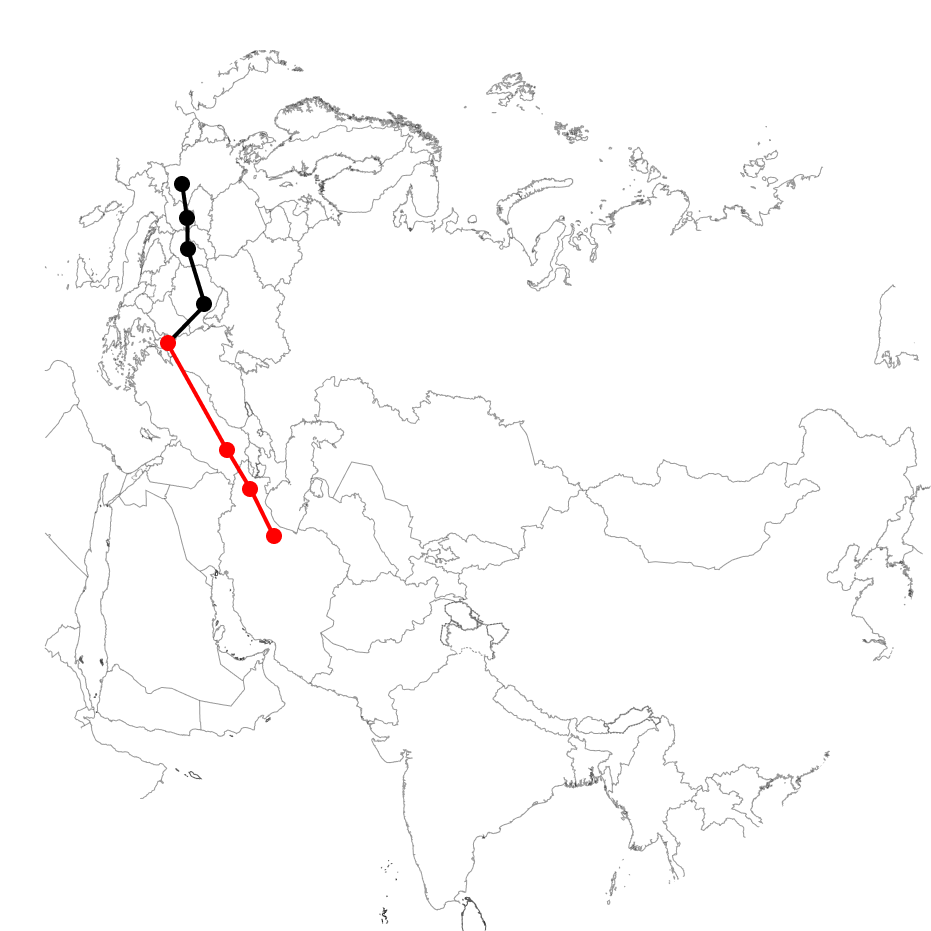
Stage II: From Istanbul via Erzurum and Tabriz to Tehran.
From Tehran, I wrote a letter to my parents, which I began and ended with «Jai sat chit anand». «Sat» stands for the state of being, «chit» for consciousness, and «anand» for bliss. That was my mood at the time—and a mantra that accompanied me.
Bus ride of horror. It was certainly a
good thing that I had already written to my parents from Tehran and told them not to worry. Because what came next was soon
not so worry-free...
Not only had I given away my warm clothes in Tehran, where it was terribly hot, without realizing that it would get bitterly cold at night in eastern Persia. I also believed during the journey there that my last hour had come.
The bus I was traveling on was full, with luggage stowed on the roof, including a few live goats whose legs had been tied together to prevent them from jumping off. This was understandable, as the drivers were driving like maniacs.
Our route took us along narrow roads, with nothing but sand on either side and later, in the mountains, gorges. Overtaking took place in the most impossible situations and the fanfares of horns, with which the drivers communicated, accompanied us throughout the journey. Someone even told me that the drivers occasionally made bets among themselves to see who could cover the distance the fastest. No wonder I broke out in a cold sweat. Especially when I spotted a crashed bus in a gorge in the mountains just before Mashhad...
But luckily there was also a distraction. Sitting next to me was a young man who introduced himself as the son of the administrator of Mashhad's city park. We both spoke only broken English. I had never learned the language at school, but had taught myself through my travels and the music I listened to.
Diagonally in front of us sat a family with a young, veiled woman my age. I smiled at her and she smiled back. When we arrived at a bus station outside Mashhad around midnight, there was only one taxi, which the family with the young woman got into. Since my seatmate was being picked up elsewhere, I asked the family if they would take me part of the way. They did. However, they did not drive into the city as I had expected. Instead, we first drove through a slum area, then they dropped me off at a campsite just beyond it.
It was dark and cold as I shouldered my backpack and walked toward the campsite, hoping that there would be a small hotel somewhere nearby. But there was no hotel. Instead, a growling stray dog came toward me.
You must be out of your mind. Back home in Germany they’re sitting in front of their TVs, and here you’re about to be torn apart by wild dogs. No one will hear your screams.
Helmut Haase
An uncomfortable encounter
It was an Afghan hound, thin in build, with a pointed snout, and it moved with frightening confidence and barked at me hostile. So I turned around. But the dog wouldn't leave me alone.
I tried not to show my fear and just kept walking. There was not a soul to be seen on the street. Not even in the slum area I was slowly returning to. Instead, more stray dogs appeared.
Today I know that in areas like this, you need to carry a stick at night to scare them away. But at the time, I didn't even dare to bend down to pick up a stone because the dogs – it was now around 1 a.m. and I had a whole pack following me – were so close behind me.
It was the moment when I cursed myself and the whole trip. «You're stupid», I said to myself. «Back home in Germany, they're sitting in front of the TV watching the news, and you're about to be torn apart by wild dogs and no one will hear you scream.» I got angry, yelled at the animals, kicked at them.
Until suddenly I remembered meditation. As I ran on, I used some breathing techniques. And just as I was beginning to calm down a little, two lights appeared in the darkness as if by miracle...
For the taxi driver who was on his way back to the bus station, I was probably just a well-paying foreign customer. For me, he was my savior. He drove me to a hotel in the center of Mashhad, and I allowed myself a good long sleep.
A very short visit to the Goharschad Mosque
The next day in Mashhad, I met up with my seatmate from the bus—the son of the city park administrator. I told him that I would like to visit the famous Goharschad Mosque with its golden dome. After all, I had had such a wonderful experience visiting the Blue Mosque in Istanbul.
We walked there together. A large crowd had already gathered in the courtyard in front of it, talking to each other – they were all men wearing turbans and were deeply devout Shiites. We walked through the gate toward the mosque and heard the dark murmur of the crowd for a moment. Then suddenly it became deathly quiet.
Shortly afterwards, there was a loud cry. The men ran towards us and started beating us. My buddy got even more blows than I did. We – including a Western hippie – had dared to enter their holy place, on the last day of Ramadan no less. Now we ran away as fast as we could. I don't know why my buddy didn't anticipate that something like this would happen. But afterwards he kindly invited me to dinner with his family.

Stage III: From Tehran via Mashad to Herat.
Escape from the midnight date
However, it didn't stop at the dinner invitation. My buddy also arranged a date with his sister in the city park for the following evening – at midnight. That scared me. After all, he had told me earlier that the girl I had flirted with on the bus was on her way to her wedding. She was getting married. Now I was worried that there were similar plans for me...
So I went to the bus station, bought a ticket to Herat in Afghanistan, and took off. Today, I wish I had talked to him again. But that's how it is sometimes with people you meet while traveling.
Ringing carriages and a mysterious fortress. On the bus ride to Herat, I met the son of a carpet dealer from Frankfurt who was looking for new merchandise. In the middle of the night, we reached the border with Afghanistan.
However, our bus didn't go any further from the border, so we persuaded a truck driver to take us with him and were allowed to sit in the back, next to stones and rubble. During the journey, he didn't even turn on the headlights because the full moon was so bright that we could see far across the country.
When we arrived in Herat on the Silk Road, the carpet dealer's son and I decided to share a hotel room and were awakened the next morning by the sound of hooves and constant ringing, because the carriages driving through the alleys were fitted with bells.
In front of many half-timbered houses stood divans on which men sat dignifiedly smoking water pipes. Every now and then, hooded figures rode past on mules or donkeys, decorated sabers and ancient rifles tucked into the belts of their coats.
But it didn't seem threatening. They were probably people from outside the city, protecting themselves from the cold and raids in the mountains. The Taliban didn't exist at that time.
King Mohammed Zahir Shah was in power, and Herat seemed peaceful and enchanted to me. It was as if I were in the middle of a crazy movie or a fairy tale.
At that time, the Taliban did not yet exist. King Mohammed Zahir Shah was in power, and Herat appeared to me peaceful and enchanted. As if I had stepped into a surreal film—or a fairy tale.
Helmut Haase
And there was something else I liked: There was hashish everywhere. I was curious and got some of the pure, strong stuff – much to the displeasure of my roommate, whom I scared with it. So I went on the next day's excursion alone. I asked a young Afghan to show me the city's landmark – the sand-colored citadel on a hill in the center.
Its foundations are said to date back to 330 BC, when Alexander the Great conquered the city and had a castle built here. The citadel itself was built in the 14th or 15th century and served as the seat and headquarters of many kings and warriors. It was restored in the early 2000s, but in the early 1970s it was in a state of partial disrepair.
I still remember the towering columns and the feeling inside the citadel. It was like entering a kind of labyrinth – with countless corridors leading into large halls and back out again. It was fascinating and eerie at the same time. Hashish was processed in some of the cave-like corridors.
We also encountered a leper who hit me with his crutch. So at some point I was glad to get out of there. However, this did not dampen my memories of enchanting Herat.
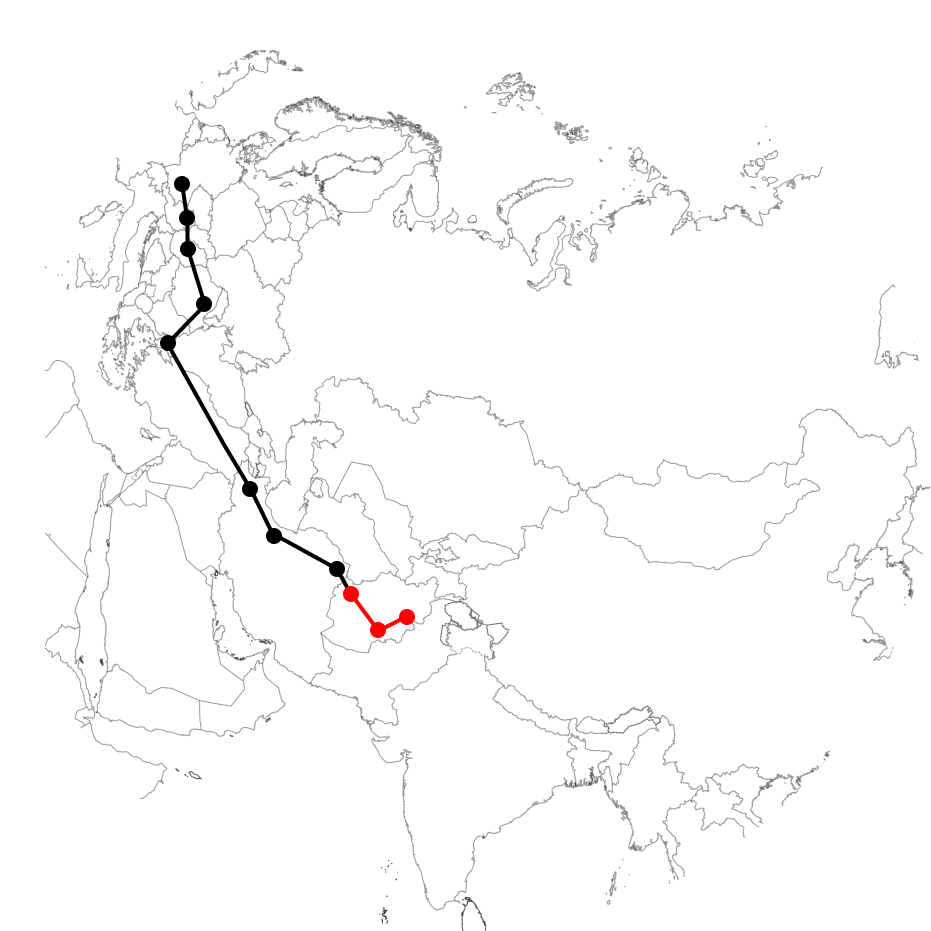
Stage IV: From Herat via Kandahar to Kabul.
Watermelons in Kandahar
A few days later, I took the bus to Kandahar in southern Afghanistan. Unlike Herat, the climate there was subtropical and oppressively hot at that time.
I strolled slowly through the streets, past numerous simple mud houses. I was also amazed when I spotted ripe cannabis plants in the middle of the city. I touched them with my hand and smelled the typical cannabis odor.
A little later, exhausted from the heat, I reached a market where watermelons smiled at me. They glowed an enticing red and were cut open and ready to eat. I bought a piece and enjoyed the sweet taste. However, I hadn't considered that the vendors had doused the fruit with water to keep it fresh.
This led to a painful experience: I came down with a nasty case of dysentery and writhed in cramps in my hotel room. Even the charcoal tablets I was given only helped a little. But at the same time, I was lucky again: I met a German agricultural engineer who kindly took me to Kabul in his Cessna.
I stayed there for two or three days to recover. This time, I didn't buy any fruit at the market in Kabul, but instead bought a rubab, a traditional bowl-shaped lute, which traveled with me from then on. I also decided to treat myself to a cheap flight to Delhi. The dysentery had really weakened me. Besides, there was tension on the border between India and Pakistan at the time.
Delhi — The beginning of a long love affair with India. When I landed in Delhi, I no longer looked Western. Since I had given away many of my clothes during my travels, I had stocked up on traditional clothing in Afghanistan.
I wore a turban, long shirts, wide pants, and typical Oriental shoes. Dressed like this, I plunged into the hustle and bustle of the city. Once again, I was in a completely different world.
Compared to the megacity of Delhi, Kabul was just a village. At the same time, Delhi seemed somewhat archaic. The most diverse worlds and, it felt, time zones coexisted in a very small space. Everything was mixed together in a wild jumble. Buses, old Ambassador cars, and motorcycles drove on the streets alongside bicycle rickshaws and ox carts. Sometimes you could even see camels or elephants. And cows stood around everywhere. They grazed even on small traffic islands in the middle of the hopeless chaos. Horns honked constantly. The streets were dusty and often dirty. Garbage was burned in many places.
At the same time, I found the hustle and bustle, the people, and the atmosphere incredibly fascinating. I stayed in Delhi for maybe a week, then traveled to Haridwar, the holy city on the Ganges, at the foot of the Himalayas. But I won't say much more about India at this point. Suffice it to say that, at the age of 22, I got my first glimpse of this incredibly diverse country. I didn't really get to know it until later. Many more trips to India were to follow.
.
Traveling the Hippie Trail showed me
how vital openness, tolerance, and one’s own experiences are.
Helmut Haase

Stage V: Kabul to Delhi.
What is more important to me at this point is something else: The realization that the entire journey to the destination of my longing shaped and enriched me. On the Hippie Trail, I learned how vital openness, tolerance, and personal experiences are.
Time and again, I walked through new worlds with amazement in my eyes, and each time I somehow found my way. I would never want to miss the change of perspective and broadening of horizons that this type of travel has given me. I think I have often pushed myself to my limits in my life. But because I did, I have also learned a lot and gained a lot of experience.
continue
traveling ...
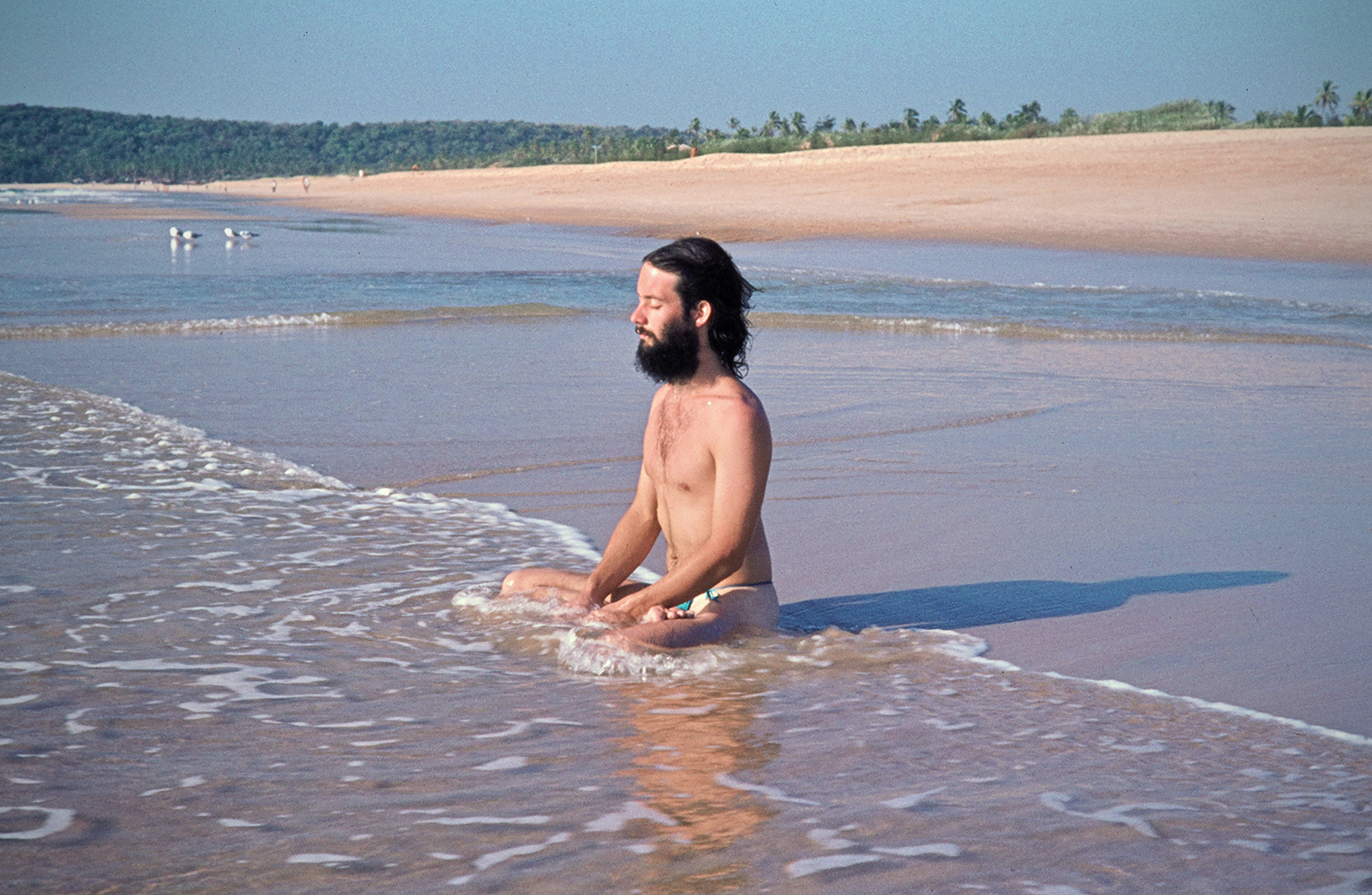
Winter in Goa — From a winter escape to a second home. At first, the Hippie Trail drew me more toward the north of India. But starting in 1975, Goa became the winter destination for my young family. While at home we traded popcorn and cotton candy machines, in Goa we escaped the gray cold and discovered a coastal paradise that became our second home.
Helmut Haase
Photography & Stories
Alle Texte und Fotos sind urheberrechtlich geschützt. Wenn Sie an der Nutzung bestimmter Inhalte interessiert sind, nehme ich gerne Ihre Anfrage entgegen.
© Helmut Haase 1975 – 2026